
VISION
To conduct research, education and extension on the foremost social and economic problems at national and international levels to provide viable solutions to decision-makers for the betterment of human life.
To conduct research, education and extension on the foremost social and economic problems at national and international levels to provide viable solutions to decision-makers for the betterment of human life.
The Gokhale Institute of Politics and Economics will strive to undertake research and provide education in all fields of economics with the singular purpose of contributing its might to enhance economic betterment and social welfare.
ABOUT GOKHALE INSTITUTE
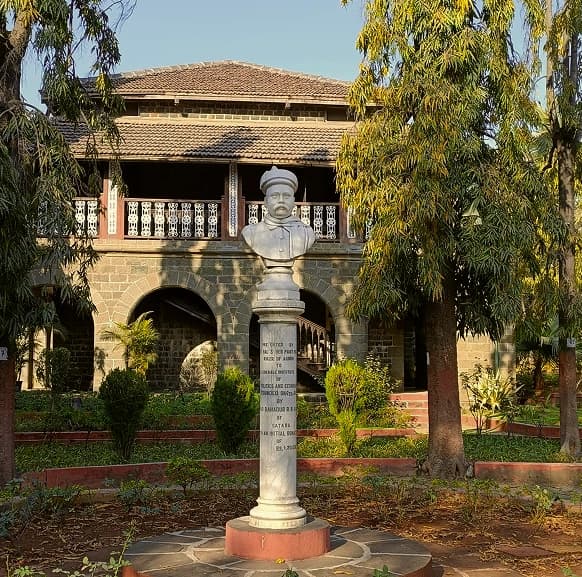
Established in 1930 in the vibrant city of Pune, the Gokhale Institute of Politics and Economics stands as one of India's most distinguished and enduring centres of academic excellence. Founded by The Servants of Society in the spirit and memory of the great statesman and social reformer Shri. Gopal Krishna Gokhale, a towering figure in India's nationalist movement and a mentor to Shri. Mahatma Gandhi, the Institute has carried forward his vision of an enlightened, informed, and progressive India for nearly a century.
Recognised as a Deemed University in 1993 under Section 3 of the UGC Act, 1956, Gokhale Institute occupies a unique and irreplaceable position in India's academic landscape as an institution dedicated exclusively to the study of Economics, and allied fields of Social Sciences. Over nine decades of sustained intellectual endeavour, the Institute has built a formidable reputation for producing graduates who shape national policy, lead academic institutions, drive economic research, and contribute meaningfully to public life.
Sanjeev Sanyal is currently a Member of Prime Minister Modi's Economic Advisory Council (EAC-PM). He was the Principal Economic Adviser to the Finance Minister for five years till February 2022. He has represented India on many international forums including as Co-Chair of the G20's Framework Working Group.
During his time in government, he has been responsible for several key reforms and was part of the core team that managed the Indian economy during the Covid-19 pandemic. He was also one of the key architects of the G20's Global Action Plan that kept the world economy functioning during the pandemic years.
Prior to joining the government, he had spent over two decades in financial markets and was a Global Strategist and Managing Director at Deutsche Bank.
An alumni of Shri Ram College of Commerce, Delhi, Mr. Sanyal later attended Oxford University as a Rhodes Scholar. He was awarded the Eisenhower Fellowship in 2007 for his work on urban dynamics. In 2010 he was named as Young Global Leader by the World Economic Forum in Davos.
He has been a visiting professor/fellow of numerous institutions such as Oxford University, Royal Geographical Society, Institute of Policy Studies (Singapore), and Jawaharlal Nehru University (Delhi). He also chairs the board of advisors of the Delhi School of Public Policy and Governance (Delhi University).
Mr. Sanyal is the author of a number of best-selling books including Revolutionaries, Land of the Seven Rivers, The Ocean of Churn, India in the Age of Ideas, The Incredible History of the Indian Ocean, and the Indian Renaissance. He has also published around two hundred and fifty articles and columns in leading national and international publications. His writings have received many awards including the Kalinga Book Award 2023, the International Indian Achievers' Award (for Literature) 2013, the Art Karat Award 2018, and so on.
Prof. Umakant Dash is a distinguished academician and visionary administrator, currently serving as the Vice Chancellor of Gokhale Institute of Politics and Economics. Prior to joining GIPE, he was Director and RBI Chair Professor at the Institute of Rural Management Anand (IRMA), India's premier institution committed to professionalizing organizations serving rural communities. Prior to joining IRMA, he was Professor and Head of the Department of Humanities and Social Sciences at IIT Madras, and served as an Adjunct Professor at IIM Tiruchirappalli. With over three decades of experience in management education, research, and institution building, Prof. Dash has held academic and leadership roles at reputed institutions such as IIT Madras, BITS Pilani, Utara University of Malaysia, and Tulane University, USA. He holds a Ph.D. in Applied Economics from IIT Kanpur and a Diploma in Health Systems Management from Tulane University, and is internationally recognized for his scholarship in health economics, public policy, and development studies.
His research, supported by global organizations including DFID, the Rockefeller Foundation, WHO, and Access Health International, addresses critical issues of equity, efficiency, and risk protection in health systems. He has led numerous collaborative projects with academic and policy institutions across South Africa, Thailand, Bangladesh, Ethiopia, Nigeria, Kenya, and the UK. His academic output includes over 90 publications in peer-reviewed international journals such as The Lancet, BMC Public Health, International Journal for Equity in Health, and Journal of Health Management. He has also supervised 17 doctoral scholars in management and public policy, many of whom now hold prominent academic and research positions in India and abroad.
Prof. Dash has designed and delivered a wide range of executive training programs for senior and mid-level professionals in government, academia, and the development sector. A regular speaker at international and national forums, he has also contributed extensively to public policy as a member of expert committees for the Ministries of Cooperation, Panchayati Raj, and Health and Family Welfare, Government of India; the SPC Working Group, Government of Tamil Nadu; and the National Technical Advisory Group on Immunization (NTAGI).
He currently serves on the governing and academic boards of several institutions, including IIT Indore, NIRD&PR Hyderabad, LBSIM New Delhi, NIBM Pune, and NIRT Chennai.
In recognition of his outstanding contributions to academia, rural development, and public service, Prof. Dash has been conferred the AIMA–Kewal Nohria Award for Academic Leadership in Management Education (2024), recognized among India's Greatest Leaders 2024–25 by AsiaOne Magazine, and awarded the LVS Public Policy 2025 – Lifetime Achievement Award by the Confederation of NGOs for Rural India (CNRI) and the World Cooperation Economic Forum (WCopEF) for his visionary leadership and impactful contributions to rural management and policy-making.
Warm greetings to all students, faculty, alumni, and well-wishers of the Gokhale Institute of Politics and Economics (GIPE).
At Gokhale Institute of Politics and Economics, our vision is to transform the Institute into a nationally leading and globally respected centre of excellence in economics, public policy, and the social sciences. Rooted in our rich legacy, we aspire to be a hub of rigorous academic research, innovative pedagogy, and meaningful policy engagement.
Our core values, academic freedom, inclusivity, and evidence-based research, continue to guide us as we shape the future. With a strong emphasis on interdisciplinary learning, collaborative research, and active engagement with policymakers, Gokhale Institute is steadily emerging as a preferred destination for students, researchers, and policymakers seeking advanced degrees, impactful collaborations, and policy formulation opportunities.
Looking ahead, our focus is on becoming a globally connected, technology-driven, and socially responsible institution, with a strong commitment to sustainability, innovation, and digital transformation.
To our students, I encourage you to remain curious, courageous, and compassionate, and to use your knowledge for building a just and equitable society. To our faculty, I extend my gratitude and urge you to continue inspiring and leading with vision and dedication.
Together, as a community, we can nurture future leaders, scholars, and changemakers equipped to address India's socio-economic challenges and contribute to a sustainable and inclusive future.
Thank you for being an integral part of the GIPE journey. Let us continue to build an academic environment that is meaningful, impactful, and future-ready.
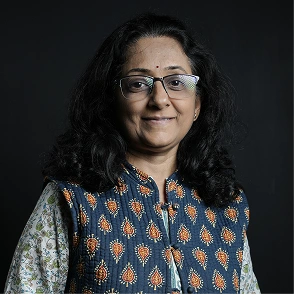
Jayanti Kajale is a professor at the Institute and works in the area of agricultural economics and currently heads the Agro Economic Research Centre at the Institute. Her research interests are the structure and occupational
jayanti.kajale@gipe.ac.in
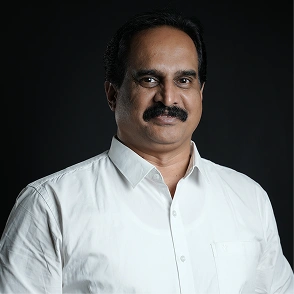
Prof. Hari's research interests include development economics, specifically labour and employment in India, skilling, human development, economic growth, financing of human development and regional economic development. He also works in the area of Public Economics.
hari@gipe.ac.in
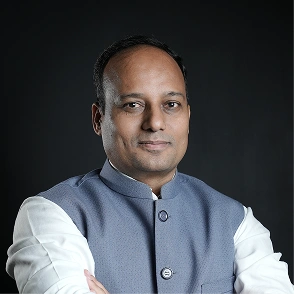
He did his doctoral research in the area of trade policy (Antidumping-Comparative Perspective and Indian Experience) from Gokhale.
naresh.bodkhe@gipe.ac.in
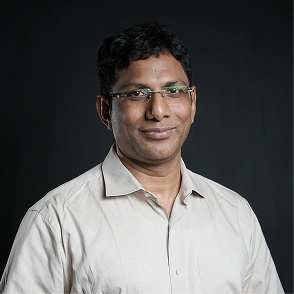
Reddy's research focuses on policy-relevant issues in India, particularly in the domains of monetary macroeconomics, banking, and financial markets. His expertise encompasses the performance and operations of Indian banks, central banking, monetary policy tr
siva.reddy@gipe.ac.in
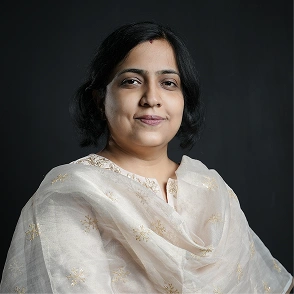
An Associate Professor at Gokhale, Atreyee's primary research interests are international trade, with a special focus on non-tariff barriers. Her secondary focus area is the econ
atreyee.chakraborty@gipe.ac.in
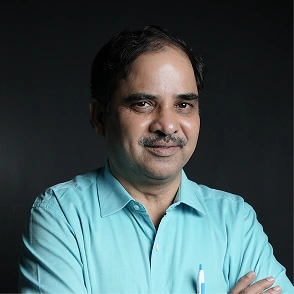
Rath is a Library and Information Science professional by training and has an interest in knowledge organisation. He is working as a Documentation Officer in the Professor cadre in the D R Gadgil Library at GIPE.
prabhash.rath@gipe.ac.in

-
registrar@gipe.ac.in

-
prateik.dhatrak@gipe.ac.in
cfo@gipe.ac.in
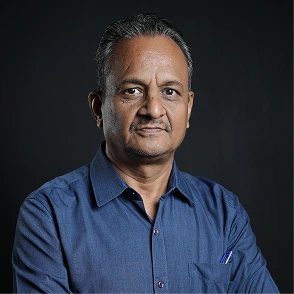
Shewale completed his Bachelors in Library and Information Sciences from Nashik in 1993, and his Advanced Diploma in Information Sciences from DRTC, ISI, Bangalore in 1996. His Ph.D. topic was 'Compatibility Study of AACR2, MARC21 and WINISIS', and he completed it at Savitribai Phule Pune University in 2004.
nanaji.shewale@gipe.ac.in
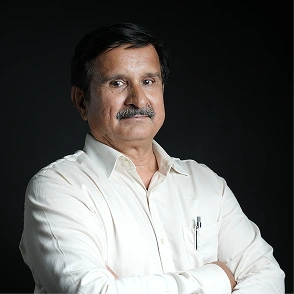
Pramod Joshi is the Information Technology Officer at Gokhale Institute of Politics and Economics. He is responsible for the IT infrastructure and services of the Institute.
pramod.joshi@gipe.ac.in
Strong foundation in economic theory and practice.
The Gokhale Institute of Politics and Economics is renowned for its initiatives in qualitative research in diverse areas of economic theory and practice. Surveys, research, informed debates, analysis and critique generated at the Institute have shaped the public discourse on major development initiatives. It has helped formulate economic policy and plans at the regional level, especially in the State of Maharashtra. Some of the research has also contributed to policymaking at the national level. The Institute has contributed to research which has been instrumental in:
Development of Asia's first cooperative sugar factory in India (at Pravaranagar, Loni) and subsequent support to the cooperative sector
Development of methodology for rural data collection, used by the National Statistical Office (NSO)
Development of methodology for national income estimation in rural India, in use by the National Statistical Office (NSO)
Development of methodology for social cost-benefit analysis of large-scale irrigation projects
Design of the institutional framework for the National Bank for Agriculture and Rural Development (NABARD)
Formulation of the Employment Guarantee Scheme in Maharashtra, which became a role model for (MGNREGA)
Formulation of the National Agricultural Insurance Scheme (NAIS)
Design of weather-based insurance products
Design of actuarial rating of National Agricultural Insurance Scheme (NAIS)
Design of inflation-indexed bonds for the Reserve Bank of India (RBI)
Formulae for pricing of electricity generated through biomass and bagasse
Evaluation of the comprehensive District Agricultural Plans for various districts in Maharashtra
Study of the Impact of MGNREGA on wage rates, cost of production, food security, and rural-urban migration